There’s a running joke on social media around the concept of dinner, and specifically, what one might be having for that particular meal. Especially for those of us without kids, the primary form of small talk after a long day at work may center around that evening’s meal, and what novel foodstuff you may be sharing with your partner (and more importantly, who’s responsible for sourcing and cooking it).
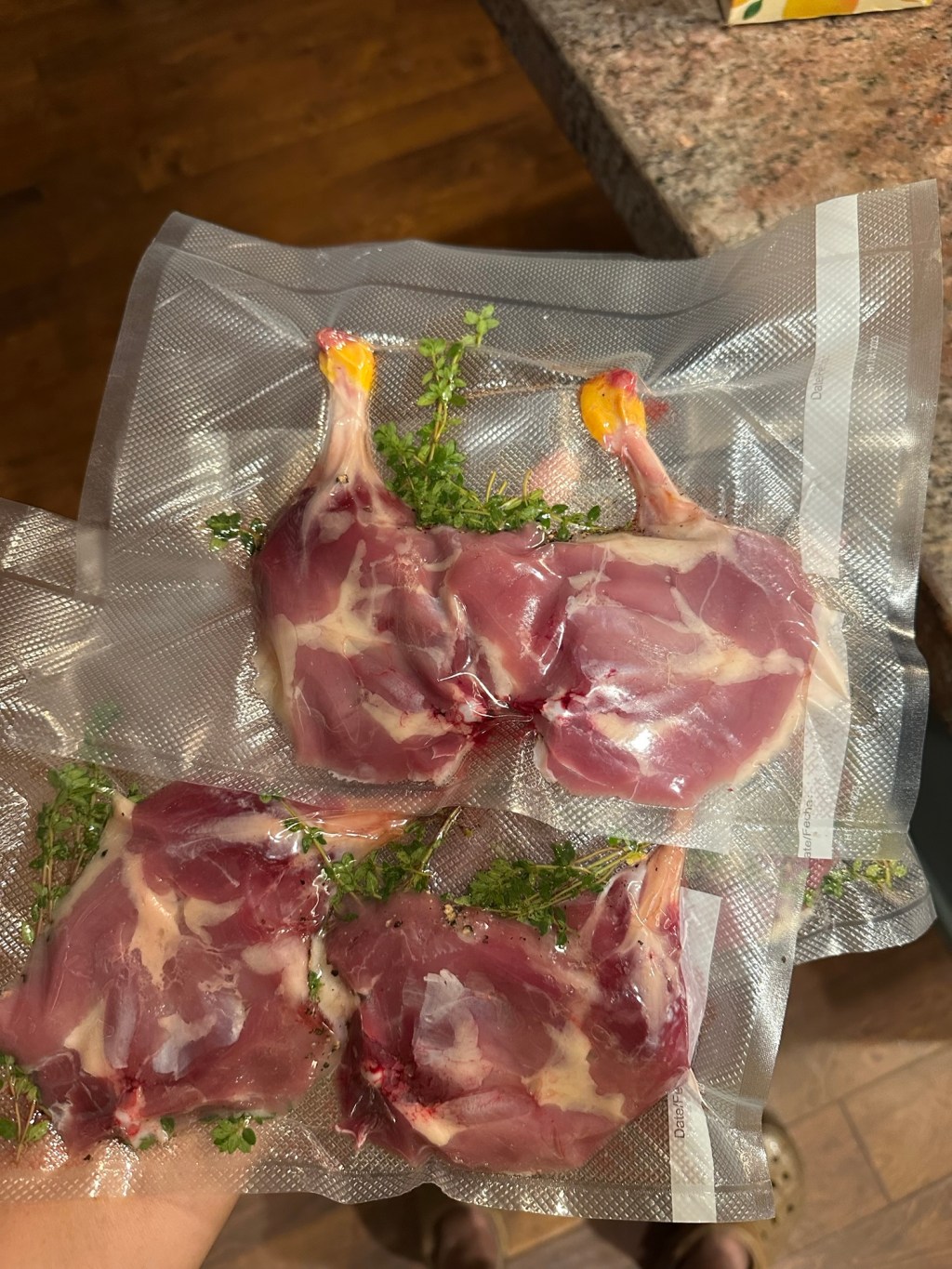
While we do regularly have that conversation in this household, the planning for a meal may have started months, if not years, ago, thanks to my deep desire to produce my own food. Tonight, I ate duck confit with goat cheese and spinach millet from products created here, at my house, by me.
Not all of these ingredients are from my efforts, just the most important ones, and it took years of careful work to create them. The cheese is from Phoebe and Gravy, both of whom we brought home in 2020, were bred in October of last year (a requirement to milk them), had their babies in March, and started sharing their milk with me in May.
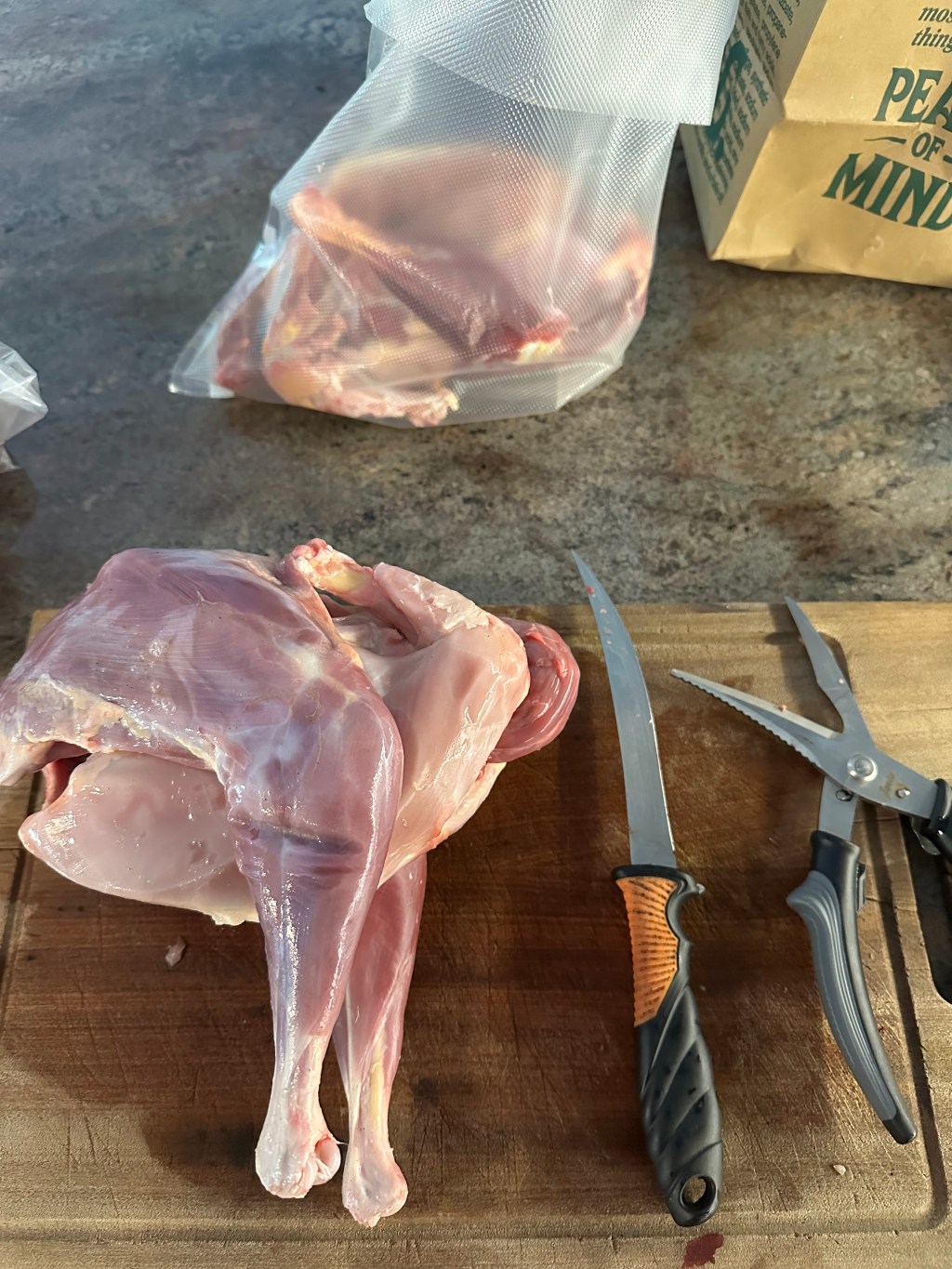
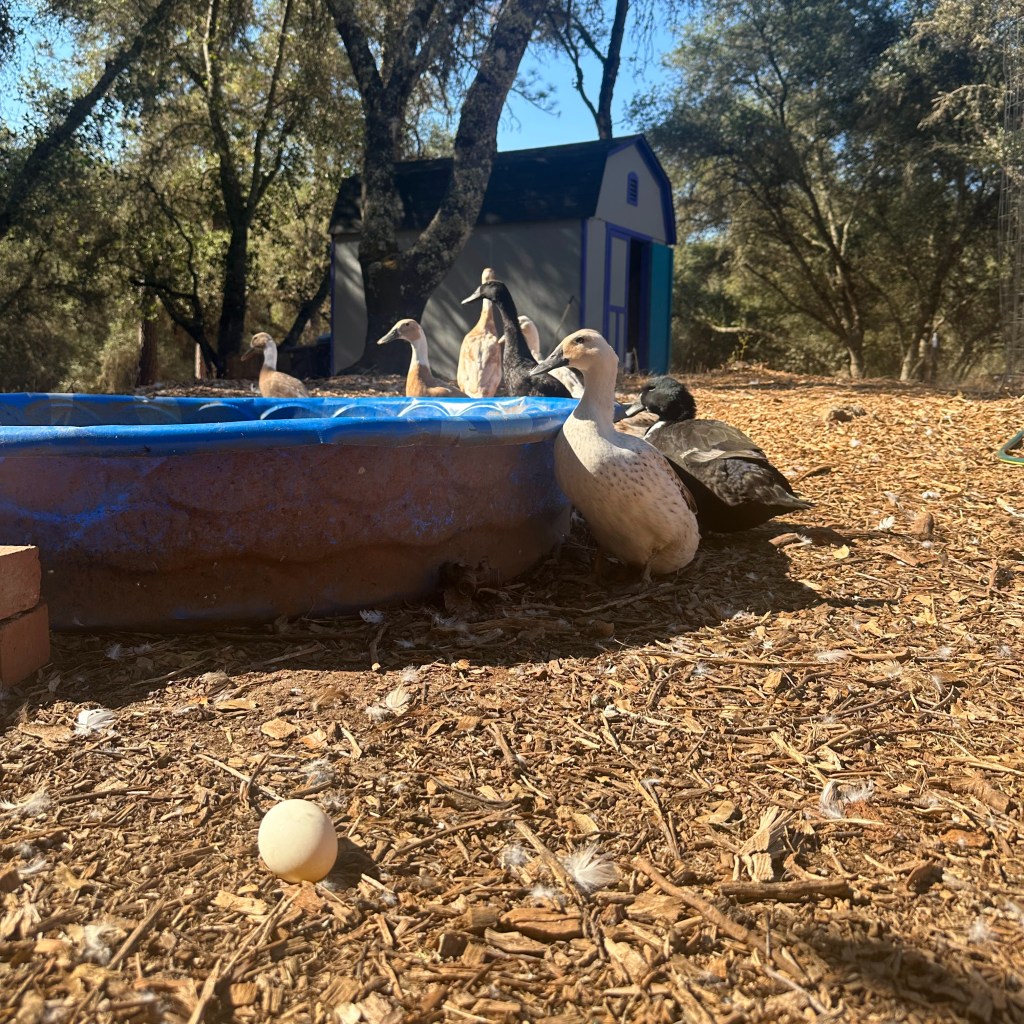
The ducks also came to me in early May, and lived their best life throughout that month and June, before providing a hard lesson to several friends on how to prepare them for the kitchen. The friends did great, and the duck thighs and legs then spent 36 hrs slow cooking before coming to my plate.
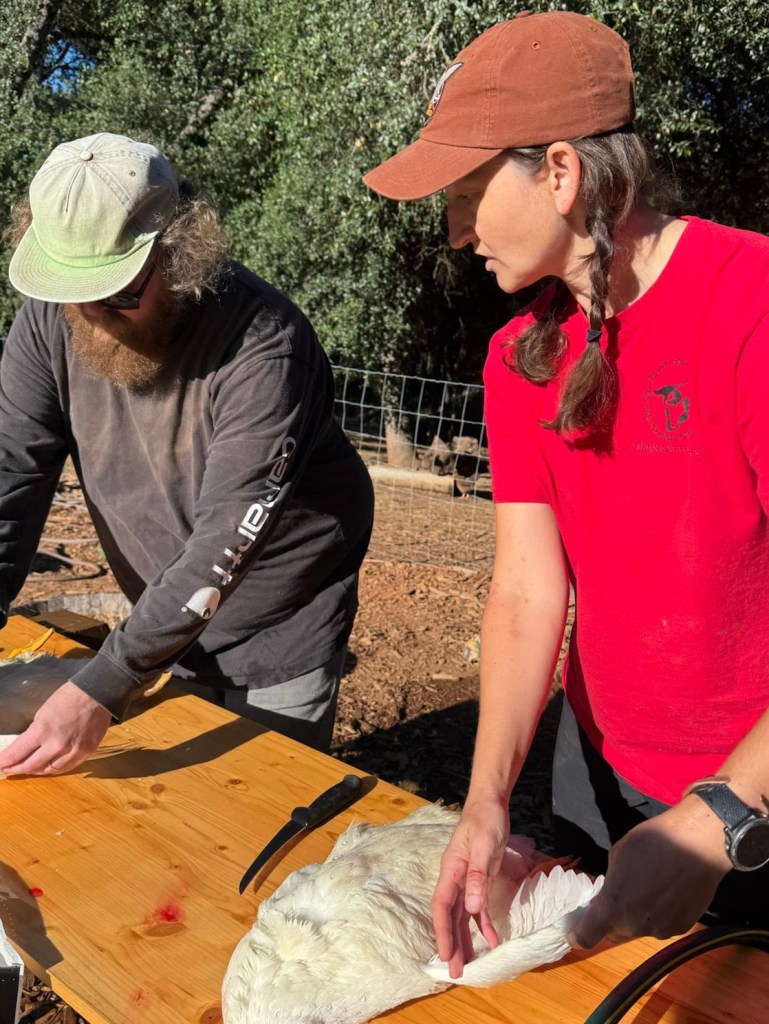
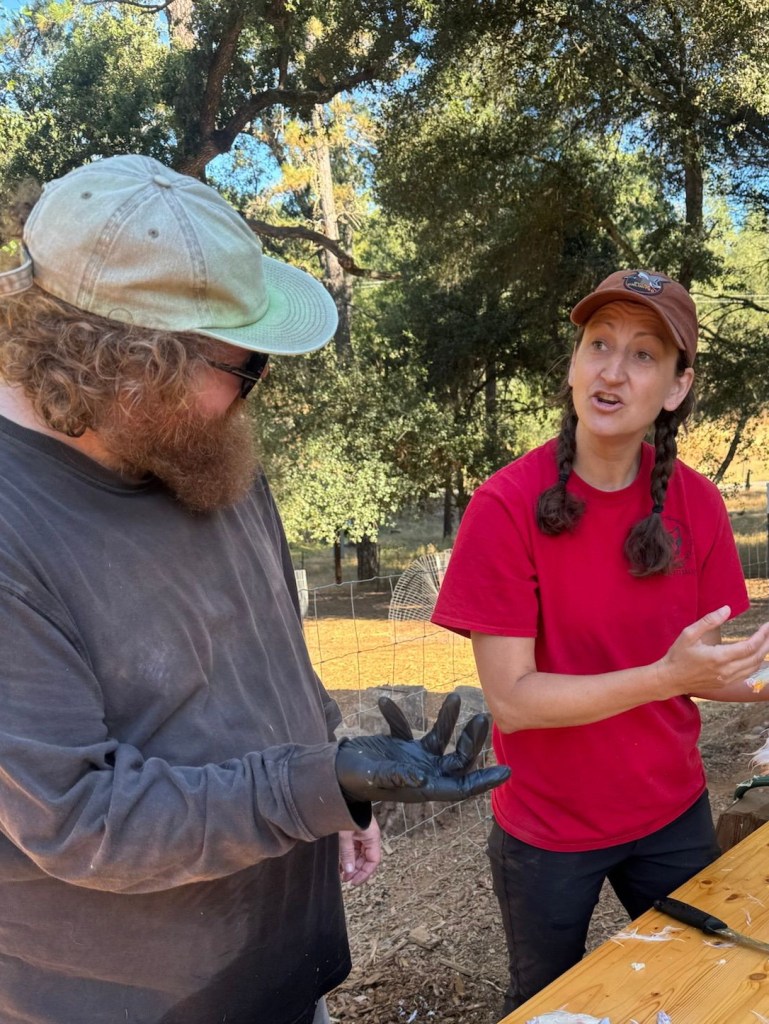
I didn’t write down when I planted the thyme that went into the confit (in my plant spreadsheet), but let’s say 2023ish, a likely time based on its location on my property. The herbs were a very small part of this meal, but their contributions are not insignificant and are definitely worth documenting.
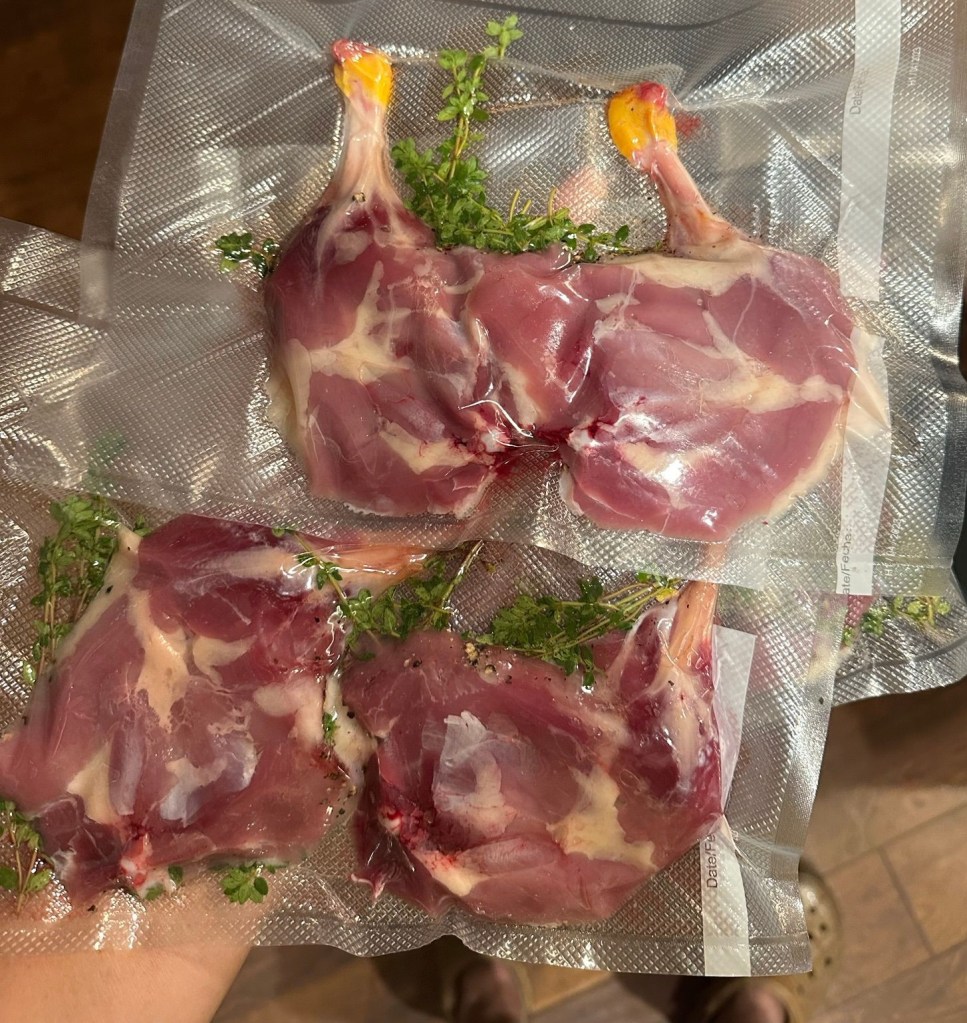
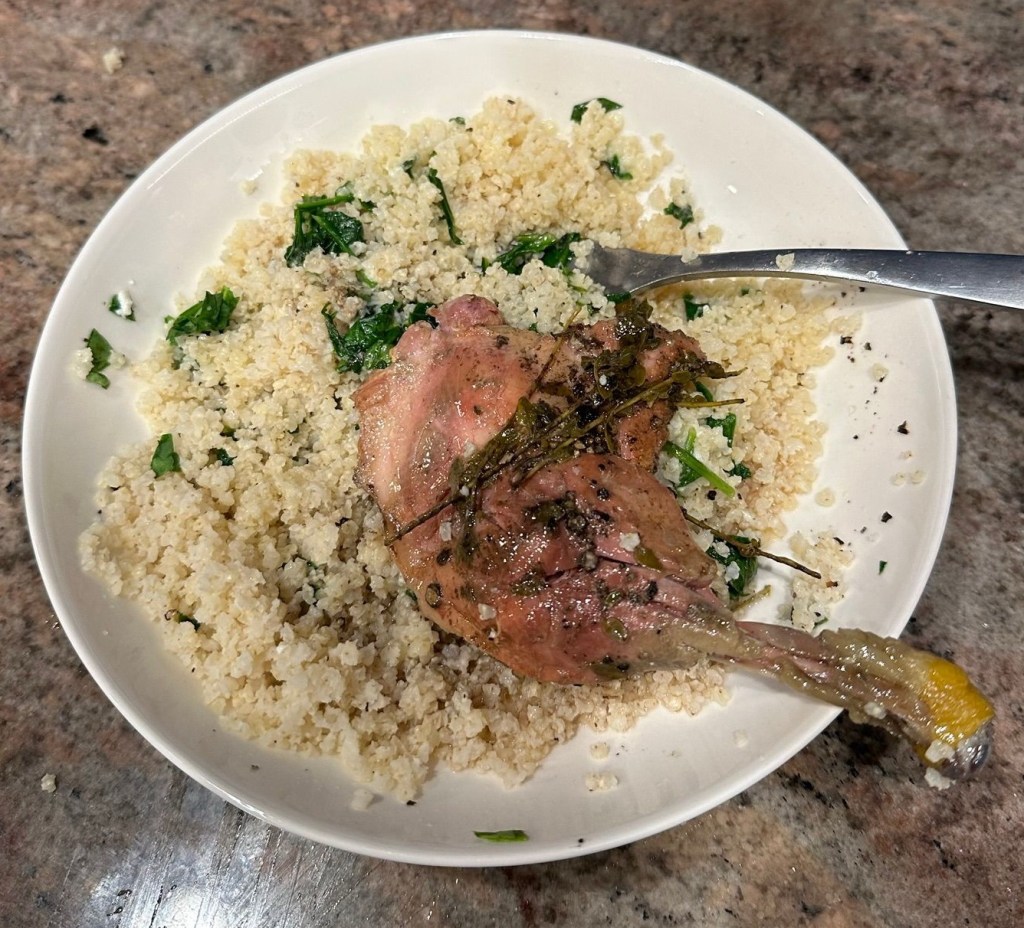
… and this meal tasted so, so good.
I don’t know if the food I produce is actually any better than what I could, theoretically, purchase in a grocery store. I do all of this as a hobby, and while I track many parts of the process, I’ve never conducted any nutritional or food safety analyses. I know for a fact it costs me more money to produce these foods at home than it would to buy them. If I weren’t raising some of these products (the duck, in particular), I wouldn’t eat them. From a food security perspective, I can meet my caloric requirements locally from other places, so it’s completely unnecessary to make products that are not vital to my well being. Likewise, it takes so much effort to create these things, and by societal standards, I could easily be doing many other, more productive, activities with my time. My least favorite chore is laundry, and the pile of clean clothes in our guest bedroom feels insurmountable, for example.
The laundry will be there when I need it, though, and I can wear the same shirt everyday after the apocalypse (I highly doubt the fashion police will survive. Joking!). That said, backyards are a known source of genetic diversity, and contributing to the conservation of processes and products in our food systems is far more important to me than having an organized closet. We may not face an outright dystopian future in my lifetime, but there is a strong chance that our weather patterns and disease dynamics (for example) will shift so dramatically, that some foods will no longer be commercially viable. Know that when that happens, I’ll be holding some knowledge over here to provide some novelty when you ask the question “What’s for dinner?”