Current Mood, October 2, 2024:
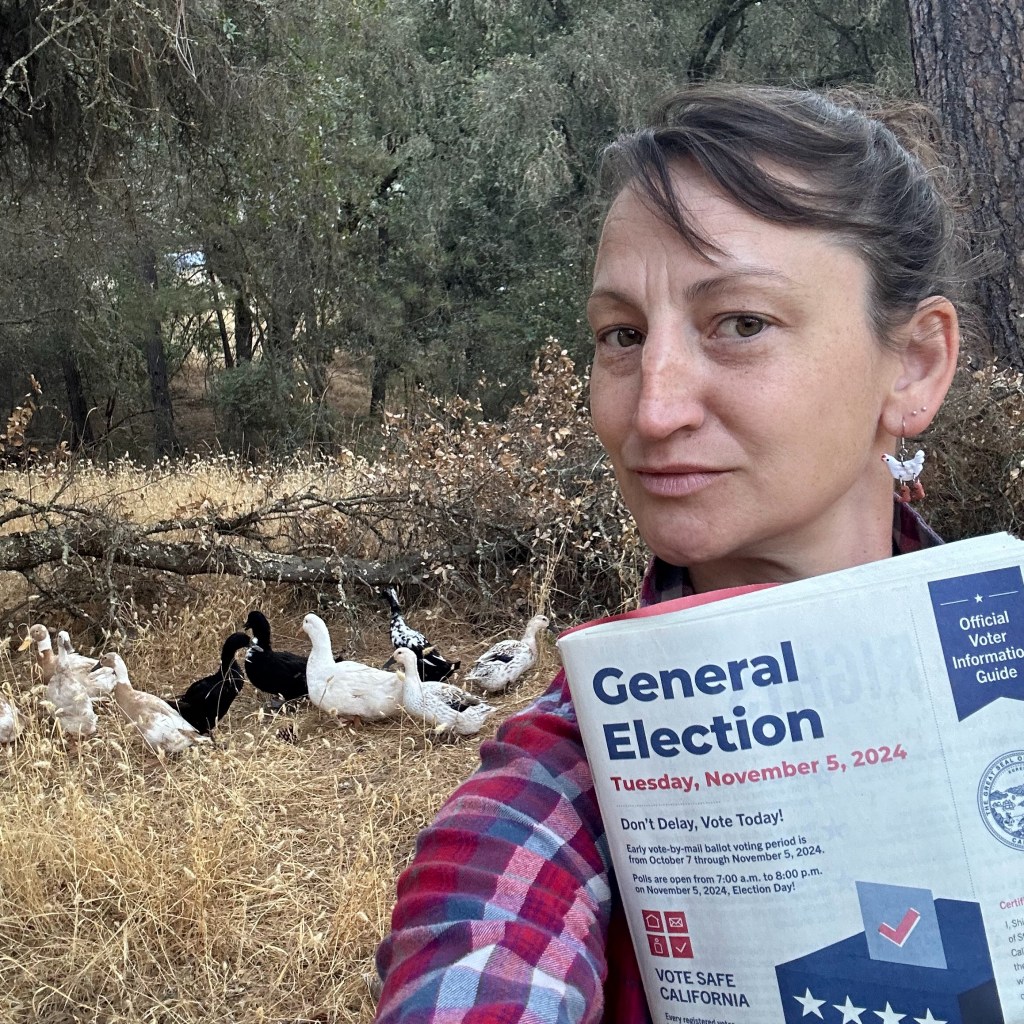
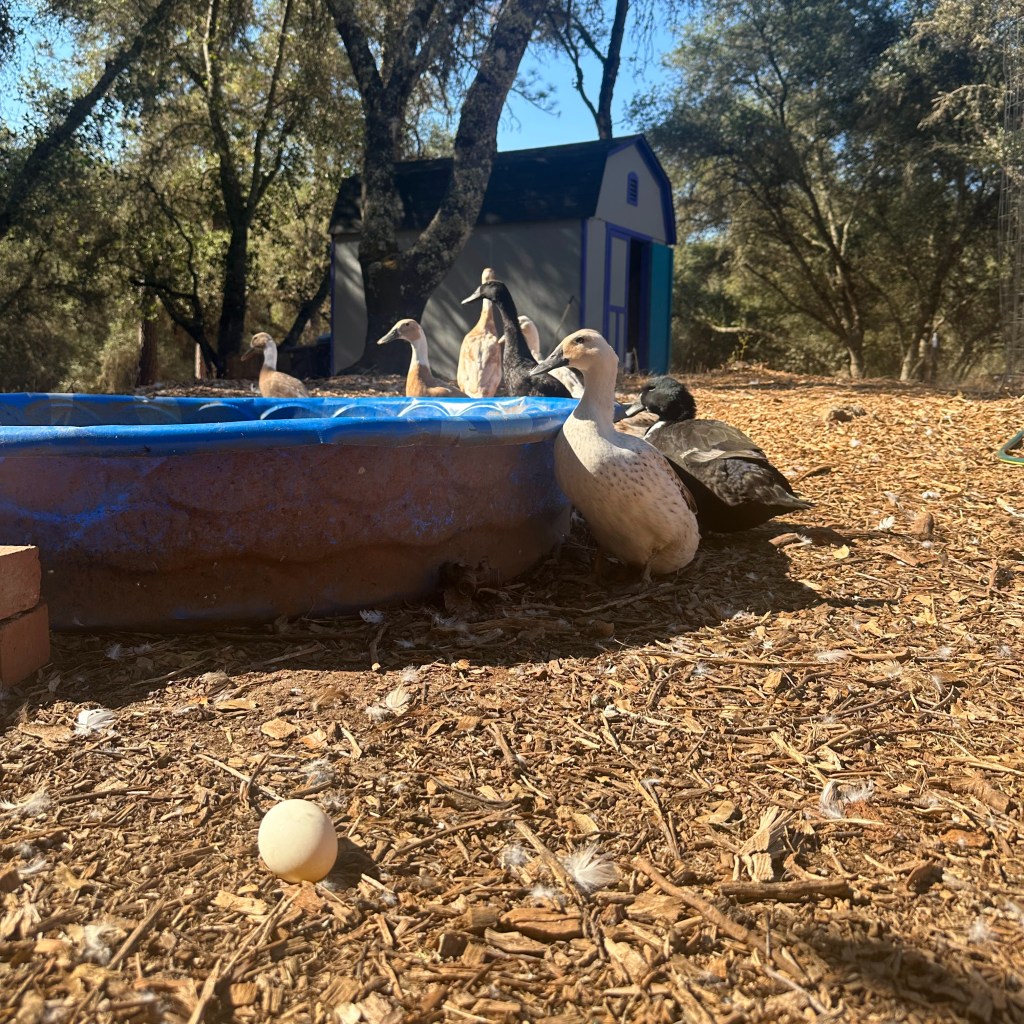
After receiving an email about the onsite certification I have to go through to ensure my egg laying animals are living in a context that provides them “adequate space,” I’m annoyed (again), by the requirements of an animal confinement law that was voted on and passed when I didn’t even live in CA (Prop 12). I received my ballot guide discussing all of the state propositions we will vote on in the November election, so it’s finally time to dig into those and make some decisions.
Let’s be clear: I’m not anti-legislation. But I am for policies that are well thought out and strategically connect the people who will be impacted with the individuals who design, vote on, enact and then implement them. Laws in agriculture, for example, are voted on by people who statistically do not work in agriculture. And are administered by, surprise surprise, people who may “work in agriculture,” but likely also do not farm or produce food.
We see effects of these laws—like farms closing or moving to states with inherently poorer legislation in areas that matter (e.g., worker safety and environment, looking at you Arkansas in the case of chicken processing)—and then say “Wow, so many farms closing, so sad, I liked those people,” without giving it a second thought. Without thinking about the impacts to those communities or livelihoods. But it’s ok, right? They can retrain and learn to code, who cares if they leave agriculture (#sarcasm, and calling attention to ineffective strategies previously used in the rust belt).
Friendly reminder that the average age of agriculturalists in the US was 58.1 (as listed in the 2022 ag census) and they’re struggling to find people to take over their farms. Please think about what that looks like for food production in the US in the next 10-20 years. Agriculture is hard work. I’ve legitimately felt my body breakdown in new ways since I started my hobby farm, and I can’t imagine doing this past 50. These individuals are producing food for the vast majority of you, at the expense of their bodies and often their mental health, and we have no strong plan of how to keep them (or anyone) doing it, for you, while we watch the environment change in real time and all of the pertinent knowledge of when to plant what, and where, go with it.
Meanwhile, we just keep slapping disabling policies on top of all of it, at least in California. Again, I’m not against legislation. It’s thanks to the Clean Water and Clean Air acts that we can even breathe in this state and enjoy our wild and scenic rivers. But with that said, managing agroecosystems is incredibly complicated, and any new laws affecting farms will inherently be controversial due to the inextricable links between people’s paid employment and what they consider their lifestyle, but those laws will also have massive downstream effects that further prevent food producers from doing what they do best: produce food.
Rather than legislating farms into changing their practices, we already know what works better: peer-to-peer education, supporting producers with learning new practices and showcasing early adopters, providing capital and incentives to support any needed changes to a system… and HOLY SMOKES GET READY FOR A NOVEL IDEA: paying the actual cost of our food.
The biggest costs in agriculture are inputs: space, land, infrastructure. If farmers make pennies for their products (and, btw have no resiliency built into the system if, let’s say, a hurricane comes through, never mind access to basics like a 401k or health insurance), of course they’re going to try and grow as much product as possible in what limited space they can with as little labor as possible. There are many bad actors in the confined animal agriculture space, we know this, but we cannot regulate our way out of a hellscape. What we can do is support a better paying, more holistic approach to agriculture, and support farmers through that by investing in trusted institutions like extension, and also create an enabling policy environment that supports incentives and for the adoption of regenerative/climate smart/conservation/sustainable agricultural practices. We also need a more systematic approach to the regulatory network, streamlining the process for farmers to stay compliant with new regulations, so as to limit the bureaucracy and confusion associated with staying legal in a highly complex network of local, state, and federal agencies.
I’m on a soap box, clearly, but I believe strongly that nothing I can say will impact anyone’s particular viewpoints. If I felt like my voice mattered, however, I’d ask you to vote. Not for yourself, but for your community. If you don’t understand a certain proposition, ask people who do, and who are looking at those laws from a science-based, critical thinking perspective. And if all else fails, just vote no, no to negative impacts to livelihoods of the people who produce your food in particular, but also no to any propositions and people that will cause more harm than good.



 Air's Wild Acres