When I started milking last year, I had no idea what I was doing. I read a ton about the best way to keep things clean, how to handle raw milk, and literally, how to milk the gals. Here is a rough summary of the way I do things, in case it’s at all helpful for others.
Risk Statement
I share this information to support you in your own decision making process for developing a milking routine. I do not test my raw milk, so I cannot speak to the safety of my methods other than through the anecdotal experience of not being sick. I encourage you to evaluate your own risk profile when consuming raw dairy, and to strive for a clean, humane, and adequately researched milking environment. The Raw Milk Institute also has great resources for setting up a risk management plan.
These are some general instructions that may be helpful, assuming that 1.) Your goats are trained to stand on the milking stand, and 2.) You have a milking stand in a distraction-free facility where you can milk.
I also don’t have running water in our barn, so this procedure will help for milking when you don’t have water to wash your hands or keep your milking stand clean! I have also tried multiple different milking vessels, and I prefer to use a jar I can hold in my left hand for the duration of milking, so that I can be responsive when/if my gal gets impatient for some reason. Specifically, I needed something that I can easily pull out from underneath the udder if she starts to kick, to avoid the potential that she steps in it.
After trying to milk into buckets, pots and other vessels, I wanted to have something that I could easily seal after each milking to ensure nothing gets spilled between the milking shed and the house, and that I could hold in my left hand while I milk with my right. I’ve tried so many different ways to use both hands to milk, and I absolutely cannot do it effectively with my left hand. I can milk much faster just using my right, and this also frees up my left hand to hold on to the jar I am milking into and to be able to move with my goat when she inevitably gets tired, impatient or starts kicking me.
I also prefer to use multiple jars, at least 1 per goat for the same reason: I’ve lost a whole day’s worth of milk because of a wild foot getting in the jar, so if I seal off the milk in smaller increments, less will have been lost to contamination. If a foot gets in it, I will just feed it to the dogs or chickens, although you could filter and save for soap if you have a good enough record keeping system for keeping it separate for your consumable milk. It is very likely there is poop on her feet, so I highly suggest not drinking any milk that has been stepped in.
Supplies
- Tea tree soap – I use Dr. Bonner’s
- Vessel to carry soapy water
- Deck brush or broom
- Antibacterial gel
- Disposable dry wipes
- At least one milk vessel per goat – I prefer a secure stainless steel (single wall) option like these mason bottles
- Grain
- Buckets to organize materials
- Strip cup (optional).
Procedure
Prepare materials
We keep all the feed in a shed near our pasture, and I keep some supplies for milking in our garage, which is about 100 feet from our milking shed.
- If you don’t have running water in your milking area, prepare a vessel with warm, soapy water. I use a quart mason jar for this, to make sure the water stays sealed as I bring it out to the barn and it doesn’t contaminate my grain or clean jars for milk.
- In a bucket, prepare grain for goats. I like to have at least a pint jar’s worth of grain per goat that I’m milking, although extra is helpful. My girls will stand still until the grain is out or they are bored, so having extra grain is necessary to keep them occupied until I can milk them out.
- Grab your dry wipes (at least 1 per goat, plus a few extra to dry hands or teats).
- Make sure you have anything else you need that you don’t leave in the barn. I keep my antibacterial gel and deck brush in the barn, for example.
Clean and Set up Area
Once in the milking area, set up your space to minimize what you need to do once you have the goats with you. Normally, I:
- Use my deck brush to sweep off the milk stand.
- Get my stool set up for sitting while milking.
- Make sure everything I need is within arm’s reach once I start milking. This includes the vessels I need, my clean wipes, antibacterial gel, and extra grain if I need it.
- Add grain to the trough on the milking stand.
Get the Goats
We have 3 separate stalls for our milking set-up; we keep the two sisters in one stall, the milking shed in the middle, and my two best milkers together in the third.
My goats are very trained and know the order in which they are supposed to milk. I start with my best milker (both in volume and her ability to stand patiently) as it eases me into the process. Then I go in order of highest producers to lowest.
I let Rachel out of her shed, and she’ll come by herself to the milking stand. Then I let everyone else out of their sheds as they don’t yell as much at me while I’m milking Rachel. Make sure to close the door to your shed closely behind you, or everyone else will try to break in and steal grain and disrupt the process. Note: if you are milk sharing with any babies, obviously wait to combine babies with mama until after the milking is all done.
Milking
Once the goat is in the shed
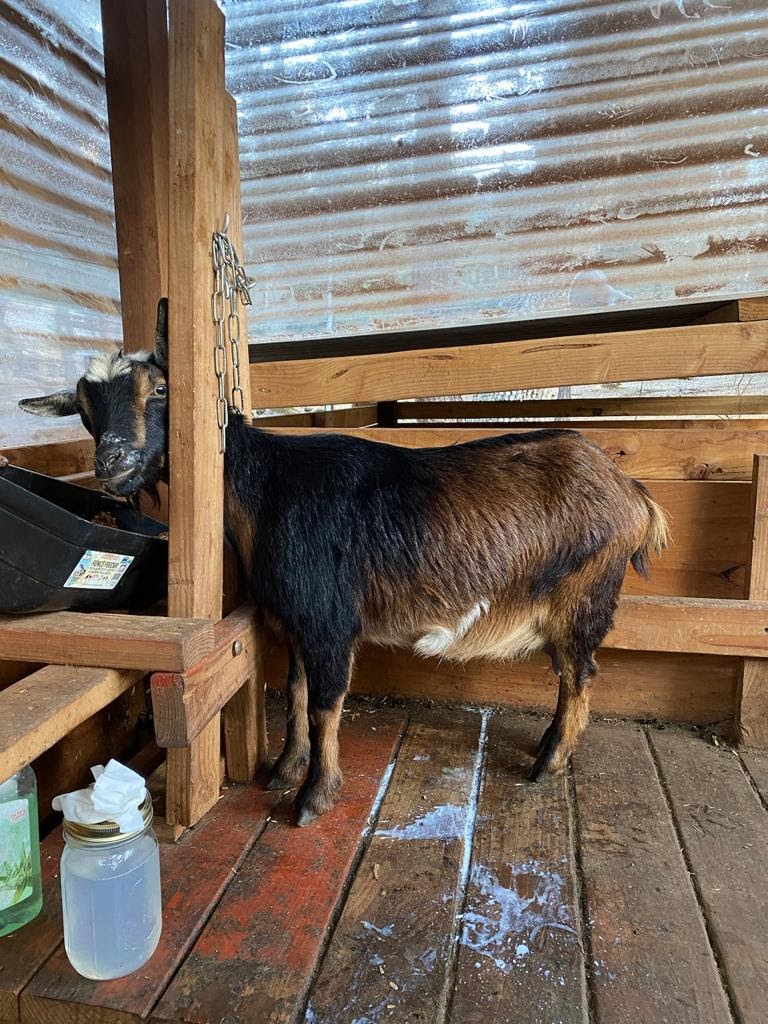
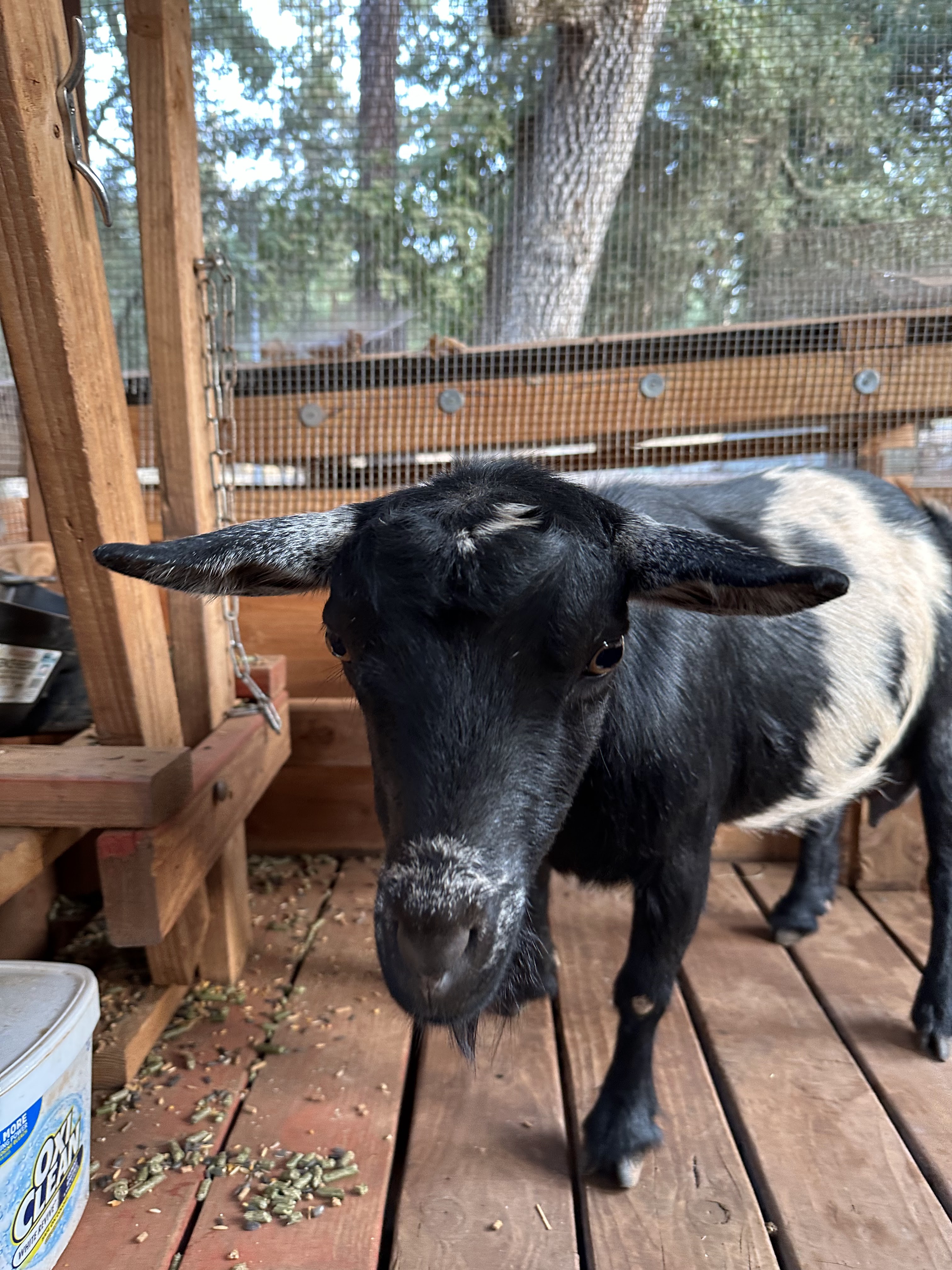
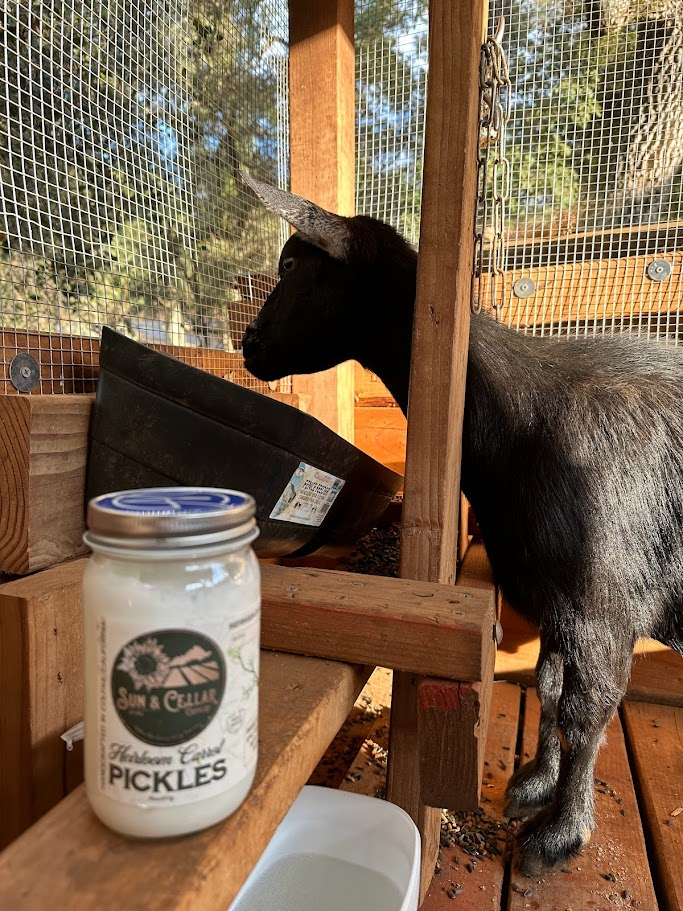
- Use your soapy water to clean the teats with a dry wipe, while checking the teats for any issues.
- Use the antibacterial gel to clean your hands and wipe down the teats.
- Use a dry wipe to dry your hands and the teats.
- If using, squirt at least five squirts of milk into your strip cup and check for any issues. Otherwise, just squirt it on the milking stand. Look for any off colors or smells; if that’s the case, milk the girl out but call your vet or treat the issue. Luckily, I’ve had no problems so I’m not the person to ask about any issues!!
- Milk your gal.
- The stream will start to slow down or stop completely when she is milked out, but she may get bored before that.
- If she starts stomping or kicking before you milk her out, you can give her more grain if she’s out. However, I find that if she becomes impatient with me or the process, it’s not worth it to push her for a few more ounces of milk. Inevitably, she’ll kick you or the milk jar, and you will have lost that time with her and/or end up with injuries.
- Once she’s done, let her down and out of the milking area.
- Close up any milk jars completely and set aside, move any dirty towels, brush off the milking stand again, and get equipment ready for the next goat.
- Proceed through step 1 for the next gal!
Cleaning Up
Once the girls are done, make sure you clean up all of your dry wipes and have all your jars sealed and in your bucket to take back to the house. Take any remaining grant out of the trough so the squirrels or other goats don’t get it, and use any remaining soapy water to clean your milking stand with your deck brush.
Filter and chill the milk as soon as possible, or at the very least, refrigerate it until you can filter.





 Air's Wild Acres